
Foundation raising
If your existing foundation has settled or dropped, raising and releveling it starts with assessing the footings that support it.
Learn more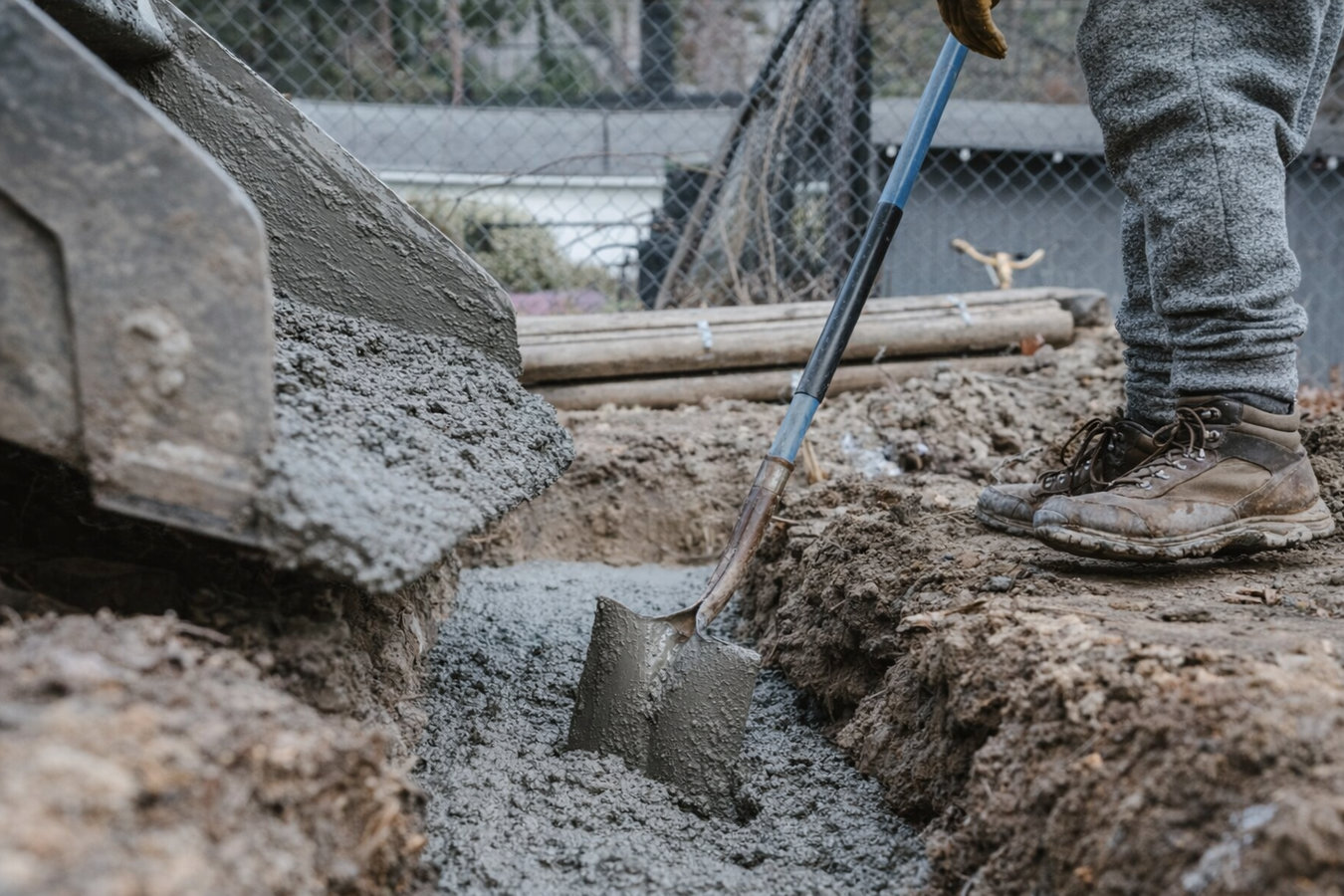
Adding on to your home, building a patio cover, or putting up an ADU? Every structure needs footings built for South Whittier clay soils and LA County seismic requirements - call for a free on-site estimate and we handle the permits too.
Concrete footings in South Whittier are the underground base that holds up any structure built above them - whether that is a room addition, patio cover, retaining wall, or ADU - and most residential footing jobs take one to three days of active work, not counting the permit timeline and cure period.
Most homeowners who call about footings are either planning a new structure and need to start the permit process, or they have noticed signs that an existing structure has started to move - diagonal cracks near window corners, doors that stick, or a gap opening between their home and an adjacent slab. In South Whittier, where the housing stock dates mostly to the 1950s and 1960s, many structures were added before current seismic and soil standards existed.
Footings are the starting point for larger structural work too. If your project involves a new foundation system rather than individual footings, our foundation installation service covers the full scope.
Cracks that angle out from the corners of doors or windows - especially ones that have grown over time - often signal movement in the ground beneath your foundation. In South Whittier's clay-heavy soil, this kind of movement is common and tends to get worse with each wet-dry cycle. It does not always mean catastrophic failure, but it does mean the footings deserve a closer look.
When the ground shifts, the frame of your house can rack slightly out of square, causing doors and windows to bind or gap. If this started happening after a wet winter or a long dry stretch - both common in this area - it is worth having a contractor assess whether footing movement is the cause. Catching it early is almost always less expensive than waiting.
Any new structure attached to your home or built on your property needs its own footing before a permit can be approved. This is required by Los Angeles County, not optional - skipping it creates serious problems when you sell the home or file an insurance claim. Getting a footing assessment early in the planning stage helps you budget accurately and avoids mid-project surprises.
If you can see a gap opening between your house and an adjacent concrete surface - a porch, driveway apron, or patio - the two structures are moving independently. In South Whittier, this often happens because the slab was poured without a proper footing, or because the soil beneath has dried and contracted. A small gap now can become a water intrusion point or trip hazard if left alone.
We pour footings for the full range of residential projects in South Whittier - from single isolated pads under a post or column, to continuous spread footings that run the perimeter of a room addition, to the deeper piers required for hillside structures and retaining walls. The type and size of footing your project needs is determined by what sits above it, the soil conditions on your specific lot, and what the LA County permit office approves. We assess all three before giving you a price, so the quote reflects the actual job rather than a guess.
ADU construction has driven a lot of footing demand in South Whittier over the past few years, and footings for an accessory dwelling unit require the same level of care as a main home. When your ADU project calls for a complete slab foundation above the footings, our foundation raising work handles foundation-level adjustments that may also be part of your overall project.
Right for room additions, ADUs, and any structure that needs a perimeter footing running the full length of a wall.
Best for patio covers, pergolas, carports, and other structures supported by posts or columns at set points.
Required for any concrete or block retaining wall to prevent the wall from sliding or rotating under soil pressure.
For covered porches, front stoops, and exterior stair landings that need a stable base below the frost line.
For older South Whittier homes where existing footings may not meet current seismic or load-bearing requirements.
South Whittier sits on clay-heavy soils that are common throughout the Los Angeles Basin. Clay expands when it absorbs water and contracts during the long dry summers - and that movement puts stress on anything sitting on top of it, including footings. A footing poured too shallow or without enough steel reinforcement will begin to shift with those soil cycles, and the structure above it will show the effects within a few years: cracked walls, sticking doors, or gaps between structures. Footing depth requirements in this area are not arbitrary - they exist because the soil conditions are genuinely demanding. Homeowners in Hacienda Heights and Norwalk face the same soil challenges, and we work throughout both areas regularly.
South Whittier is also close to an active fault zone, and Los Angeles County requires that footings for most structures be designed to handle the lateral forces that come with ground shaking - not just the vertical weight of the structure above. For some projects, a licensed structural engineer must review and approve the design before the county issues a permit. This adds a step and some cost, but a footing designed only for vertical load in an earthquake-prone area is a genuine risk. We coordinate engineer reviews when required and manage the entire permit and inspection process through LA County, so you are not navigating that on your own.
When you reach out, we will ask a few basic questions: what you are building, roughly where on the property, and whether you have spoken to the county about permits. We schedule a site visit within a few days and give you a written estimate after seeing the area in person. You do not need everything figured out before you call.
For most structural work in South Whittier, a permit is required before anything goes in the ground. We prepare or review the plans needed for submission to Los Angeles County and handle the application on your behalf. Approval typically takes a few days to a few weeks - we keep you updated throughout and factor the timeline into your schedule.
On the first day of active work, the crew digs the trench or hole to the required depth and places the steel reinforcement. A county inspector visits to verify the depth and steel placement before any concrete is poured. This inspection step is actually to your benefit - it confirms the work is correct before it is buried forever.
Once inspection is approved, concrete is poured into the forms, consolidated to remove air pockets, and finished at the surface. In South Whittier summers, the crew pours early in the morning and keeps the surface moist for the first few days. The footing is typically ready to build on within one to two weeks. We will tell you exactly when to proceed.
Free on-site estimate. We manage the LA County permit from start to finish. No pressure, no obligation.
(562) 586-9375We carry a current California contractor license - verifiable on the CSLB website in minutes. Footing work is structural, and you want a contractor who can be held accountable. Every project is covered by liability insurance from start to finish.
South Whittier sits on expansive clay soils near an active fault zone. We size and reinforce every footing for both the soil movement that comes with the area's wet-dry cycles and the lateral forces required by California's seismic standards - not just the minimum depth.
Because South Whittier is unincorporated, all permits and inspections go through Los Angeles County rather than a city. We have navigated this office many times, handle the full application and inspection process, and keep you updated so the paperwork never becomes your problem.
We work throughout South Whittier and the surrounding communities - from Hacienda Heights to Norwalk to Downey. Local experience means we know what county inspectors look for here, how deep local soils require footings to go, and what a realistic timeline looks like in this permitting jurisdiction.
Footings are the part of a project that no one sees once the job is done - which is exactly why getting them right matters so much. Every footing we pour in South Whittier is built for the soil conditions, the seismic zone, and the LA County permit requirements specific to this area, so the structure above it starts and stays on solid ground.
Verify our license at the California Contractors State License Board. Footing and foundation standards are published by the American Concrete Institute. Seismic hazard information for the South Whittier area is available from the California Geological Survey.
If your existing foundation has settled or dropped, raising and releveling it starts with assessing the footings that support it.
Learn moreWhen a project calls for a complete foundation system rather than individual footings, this service covers the full scope.
Learn moreConcrete poured in extreme heat needs extra care to cure correctly - schedule your project now while conditions are favorable and your timeline is flexible.